
Dr. Jay Bhaumik’s position as Chairman of Thesis Pharmacy has positioned him to recognize when an innovation crosses from promising to inevitable. It is his belief that automated compounding has entered that conversation.
Pharmaceutical compounding has integrated robotics and artificial intelligence inside clean rooms at forward-thinking compounding facilities across the country, and the implications for patient safety, medication accuracy, and pharmacy operations are significant enough to demand serious attention from everyone with a stake in the future of personalized medicine.
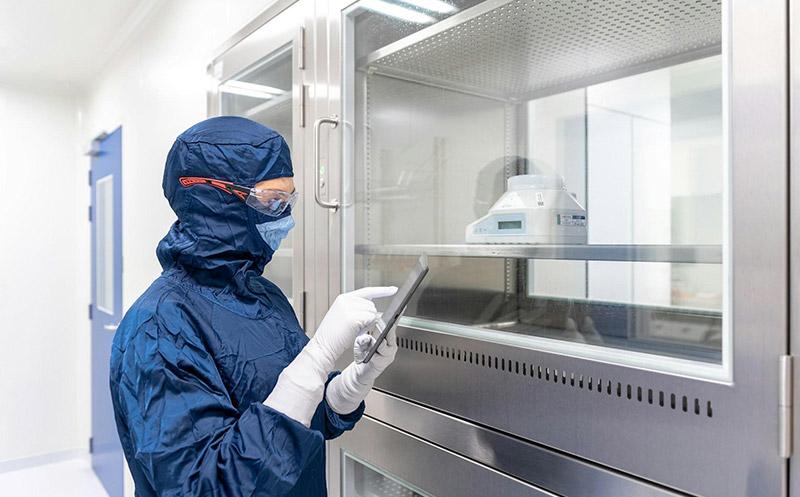
The Clean Room, Reimagined
Compounding clean rooms have always been one of the pharmacy’s most labor-intensive environments. Under USP Chapter 797 and 800 standards, technicians and pharmacists manually prepare sterile and hazardous formulations with precision that leaves no margin for error. Contaminated preparation or a miscalculated dose can cause serious patient harm.
For decades, expert human hands were simply the best available instrument for that work. Robotics is changing that calculus as automated compounding systems, from gravimetric robots that dispense by mass to fully integrated IV admixture platforms preparing dozens of sterile preparations per hour, are exceeding manual accuracy benchmarks. The machines never fatigue, and they consistently perform with identical precision.
Where Artificial Intelligence Enters the Process
AI-powered systems are now being deployed across compounding operations to manage everything from formula verification and ingredient compatibility screening to real-time environmental monitoring within clean room facilities.
These platforms can flag potential drug interactions in a compounded formulation before preparation begins, cross-reference active pharmaceutical ingredient lot numbers against supplier quality records, and analyze environmental sensor data to detect conditions that could compromise sterile integrity.
AI also delivers measurable value in workflow optimization. Compounding pharmacies processing high volumes of prescriptions must balance preparation sequencing, equipment availability, and pharmacist verification in ways that directly affect both patient wait times and operational cost.
Intelligent scheduling systems that learn from historical preparation data and adjust dynamically to real-time variables are reducing bottlenecks and improving throughput without sacrificing the verification steps that regulatory compliance requires. Dr. Jay Bhaumik sees this convergence as structurally significant.
“Automation gives the pharmacist better tools to exercise judgment, not replace it. The clinical expertise still has to be there. What changes is how much of the process is subject to human error,” he says.
Accuracy, Safety, and the Error-Reduction Imperative
Medication errors in compounded preparations represent a genuine and documented patient safety risk. The FDA’s adverse event reporting data has contained compounding-related incidents that trace directly to human error in the preparation process.
Automated systems with closed-loop verification, gravimetric confirmation of ingredient quantities, and barcode-based ingredient authentication address many of the most common error vectors simultaneously. Sterility assurance is particularly strengthened by robotic systems designed for aseptic processing.
Isolator-based compounding robots that prepare sterile preparations within sealed, ultraviolet-sterilized environments dramatically reduce the bioburden risk associated with human presence in the critical zone. Some systems perform the entire preparation process, from ingredient aspiration through final container sealing, without any direct human contact with the preparation itself. The result is a sterility assurance level that manual technique, however skilled, cannot consistently replicate at scale.
“The facilities that invest in automation are going to set a quality standard that raises expectations across the board,” says Dr. Bhaumik. “Patients and prescribers will come to expect that level of precision, and pharmacies that can’t deliver it will find themselves at a disadvantage.”
Regulatory Landscape and the Path to Standardization
The regulatory environment governing automated compounding is still catching up to the technology. USP Chapter 797 provides the foundational framework for sterile compounding quality standards, and its most recent revision, finalized and effective in 2023, addresses several contemporary compounding practices. The FDA’s oversight of 503B outsourcing facilities, which are subject to current Good Manufacturing Practice standards, has created a tier of compounding operations already accustomed to the documentation rigor and process validation requirements that automated systems demand.
For 503A traditional compounding pharmacies considering automation, the path involves navigating state board of pharmacy regulations for compounding that vary considerably in how they address automated preparation systems. Some states have developed specific guidance for gravimetric compounding technology, while others are still formulating their positions.
Pharmacies investing in automated infrastructure must engage proactively with their state regulatory bodies to ensure that validation protocols, documentation standards, and pharmacist oversight requirements are clearly defined and consistently met.
The accreditation bodies that serve the compounding pharmacy sector, ACHC and PCAB among them, are also developing evaluation criteria for automated operations that will eventually create clearer benchmarks for what responsible automation looks like in practice. Standardization, when it arrives, will accelerate adoption by giving risk-averse pharmacy operators a defined compliance framework to build toward.
The Human Element That Technology Cannot Replace
Automation handles the repeatable, process-driven dimensions of compounding, but clinical judgment, along with patient counsel and therapeutic evaluation, remains squarely human work. Properly implemented automation frees pharmacists from tasks most susceptible to error and fatigue, redirecting their expertise toward the decisions that genuinely require it and the patient care functions that define what pharmacy is actually for.
“The pharmacist’s role becomes more important in an automated environment, not less. The technology handles precision at scale. The pharmacist handles everything that precision alone can’t resolve,” says Dr. Bhaumik.
Automated compounding is not arriving as a disruption to the pharmacy profession but instead entering as an answer to a long-standing challenge. Consistency, scalability, and safety have always been the aspirations of high-quality compounding practice.
Robotics and AI are delivering on those aspirations in ways that manual methods never fully could. The clean room of the future will look different than the one operating today, but its purpose will remain to produce medications that meet the specific needs of individual patients with uncompromising quality. Technology is the means, but the patient must always remain the point.